
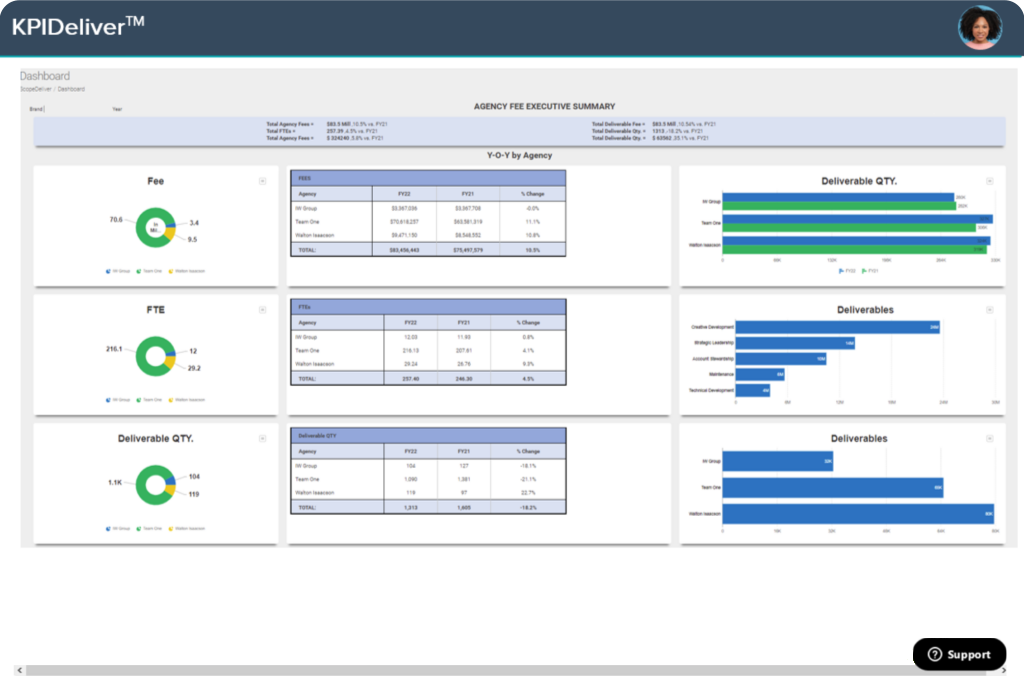

In today’s fast-paced business world, understanding and acting on your company’s performance is not just an advantage—it’s a necessity. Key Performance Indicators (KPIs) serve as critical compass points, guiding organizations toward their strategic objectives. But merely defining KPIs isn’t enough; the real challenge and opportunity lie in effectively tracking them. This requires robust KPI tracking solutions that can collect, analyze, and present data in a meaningful way, enabling informed decisions and fostering continuous improvement across all departments.

Overview:
- Effective KPI tracking solutions are vital for modern businesses to monitor performance and achieve strategic goals.
- They provide data-driven insights, helping organizations make better decisions and identify areas for improvement.
- Various types of KPI tracking solutions exist, from simple spreadsheets to advanced business intelligence platforms, each suited for different needs.
- Choosing the right solution involves assessing your specific requirements, budget, scalability needs, and integration capabilities.
- Successful implementation requires clear KPI definition, proper data integration, user training, and a commitment to regular data review.
- Regular analysis and acting upon the insights generated by these solutions are crucial for maximizing their value.
- These systems help organizations in the US and globally to stay competitive and responsive to market changes.
Why Effective KPI Tracking Solutions are Essential Today
The business landscape is increasingly data-driven, and organizations that fail to monitor their progress rigorously risk falling behind. Effective KPI tracking solutions offer a clear, quantifiable way to measure success against predetermined goals. For businesses operating in the US and internationally, these solutions provide numerous benefits. Firstly, they foster accountability by making performance metrics transparent across teams and individuals. When everyone understands what success looks like and how their work contributes, motivation and alignment improve.
Secondly, robust tracking systems enable proactive decision-making. Instead of reacting to problems after they’ve escalated, companies can spot trends and issues early, allowing for timely interventions. For example, a decline in customer satisfaction KPIs can trigger an immediate review of service processes, preventing further damage. Thirdly, these solutions support strategic planning by validating assumptions and highlighting areas where resource allocation might need adjustment. Without clear data, strategic shifts are often based on guesswork; with strong KPI tracking, they become evidence-based. This systematic approach not only saves time and money but also positions businesses for sustainable growth in competitive markets.
Selecting the Right KPI Tracking Solutions for Your Business Needs
The market offers a wide array of KPI tracking solutions, ranging from basic to highly sophisticated. Choosing the appropriate one depends heavily on your organization’s size, budget, industry, data complexity, and specific objectives. For smaller businesses with fewer KPIs and limited data sources, enhanced spreadsheets (like Google Sheets or Microsoft Excel) combined with visualization tools might suffice. They are cost-effective and relatively easy to set up.
However, as businesses grow and data sources multiply (CRM, ERP, marketing platforms, finance systems), more powerful solutions become necessary. Business Intelligence (BI) platforms such as Tableau, Power BI, or Qlik Sense offer advanced data visualization, integration capabilities, and interactive dashboards. Specialized KPI dashboards and performance management software are also available, often tailored to specific industries or functions. When evaluating options, consider factors like ease of integration with your existing systems, scalability to accommodate future growth, user-friendliness for various team members, reporting flexibility, and the level of data security offered. It’s important to select a solution that matches your current operational requirements while also having the capacity to evolve with your business.
Implementing Your Chosen KPI Tracking Solutions Effectively
Once a solution is selected, effective implementation is key to realizing its full potential. The first step involves clearly defining your KPIs. This is not just about picking metrics, but ensuring they are Specific, Measurable, Achievable, Relevant, and Time-bound (SMART). Each KPI should directly align with a strategic objective. Next, focus on data integration. Your chosen KPI tracking solutions need reliable access to accurate data from all relevant sources. This might involve setting up automated data feeds or manual input processes, ensuring data integrity at every step.
Training is another critical component. Users across the organization, from leadership to frontline staff, need to understand how to interact with the tracking system, interpret the data, and how their individual efforts contribute to the overall KPIs. Provide clear documentation and ongoing support. Finally, establish a regular review cycle. KPIs are not set-and-forget; they require consistent monitoring, analysis, and discussion. Schedule regular meetings to review performance, discuss variances, and decide on corrective actions. This structured approach helps embed the tracking solution into the daily operations and strategic rhythm of the business.
Maximizing Value from Your KPI Tracking Solutions
Implementing effective KPI tracking solutions is merely the starting point; extracting maximum value requires a commitment to continuous engagement and action. The data generated by these systems offers a wealth of insights, but these insights only become valuable when they drive decisions and changes. Encourage a culture where data informs conversations and challenges assumptions. This means moving beyond just reporting numbers to understanding the “why” behind the trends.
Regularly review and refine your KPIs. As business objectives evolve, so too should your key performance indicators. What was critical last year might be less so today. Your tracking solution should be flexible enough to adapt to these changes. Furthermore, leverage the visualization capabilities of your solution to create clear, compelling dashboards that tell a story at a glance. Visual reporting makes complex data accessible and actionable for different audiences. By consistently analyzing data, sharing insights across the organization, and acting decisively based on the information provided by your KPI tracking solutions, your business can foster agility, optimize performance, and maintain a competitive edge in any market.


