


Policy structure analysis systematically examines policy design, organization, and implementation. It uncovers frameworks, actors, and mechanisms to understand policy effectiveness and implications.
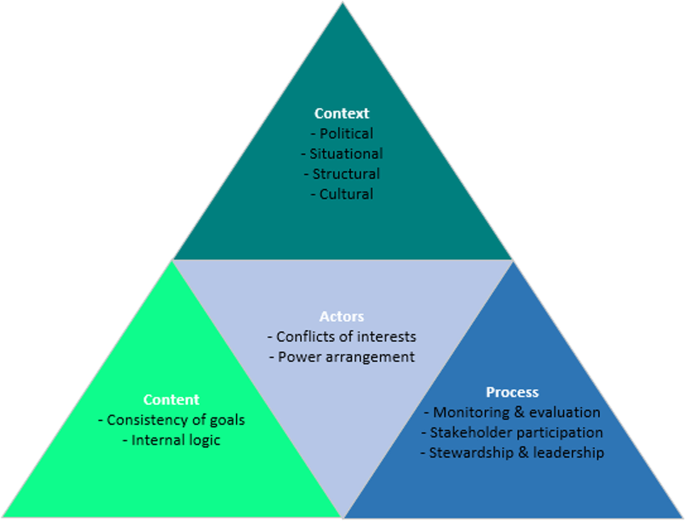
Understanding how policies are built, organized, and executed is fundamental to effective governance and societal well-being. Policy structure analysis provides a systematic approach to deconstructing these intricate systems, moving beyond surface-level descriptions to reveal the underlying architecture that dictates how policies function in practice. This type of analysis delves into the formal and informal elements, relationships, and processes that constitute a policy, offering insights into its potential for success or failure, its adaptability, and its impact on various stakeholders. By dissecting the organizational blueprints of policies, analysts can identify strengths, weaknesses, and areas for improvement, ultimately contributing to more robust and equitable public outcomes.
Overview
- Policy structure analysis is a systematic method for examining the design, organization, and operational frameworks of public policies.
- It goes beyond policy content to investigate the institutional arrangements, rules, actors, and processes that shape policy implementation and impact.
- This analysis helps identify critical elements like policy goals, instruments, target populations, and the governance structures involved.
- Key methods include institutional analysis, stakeholder mapping, and examination of legal and administrative frameworks.
- The insights gained are crucial for predicting policy performance, identifying inconsistencies, and proposing structural improvements.
- It supports informed decision-making, enhances accountability, and aids in designing policies that are more resilient and effective.
- Understanding policy structure is vital for addressing complex societal challenges, from healthcare reform to environmental protection.
Policy structure analysis primarily involves breaking down a policy into its constituent parts to understand how they interrelate and collectively produce specific outcomes. It’s not merely about reading the text of a law or regulation, but about investigating the entire ecosystem in which that policy operates. This entails scrutinizing the formal rules, such as statutes, regulations, and administrative guidelines, as well as the informal norms, practices, and power dynamics that influence policy enactment and enforcement. Analysts examine the objectives a policy aims to achieve, the specific instruments it employs (e.g., subsidies, taxes, mandates), the agencies responsible for its delivery, the target groups it seeks to affect, and the resources allocated for its operation. For instance, in analyzing an education policy, one might look at the curriculum standards, the funding mechanisms for schools, the role of federal versus state education departments, and how teacher qualifications are mandated. The goal is to build a detailed map of the policy’s operational environment, exposing both its explicit design and its practical functioning.
Key Components of Policy Structure Analysis
To effectively conduct policy structure analysis, several key components are typically examined. Firstly, the institutional framework forms a crucial part. This includes the governmental bodies, non-governmental organizations, and private sector entities involved in policy formulation, implementation, and oversight. Understanding their mandates, capacities, and interdependencies is vital. Secondly, policy instruments are scrutinized. These are the tools chosen by policymakers to achieve their objectives, ranging from financial incentives and disincentives to information campaigns, direct provision of services, or regulatory measures. The choice and design of these instruments significantly shape a policy’s structural integrity and its impact. Thirdly, the rules and norms governing the policy process are important. These encompass legal provisions, administrative procedures, reporting requirements, and even unwritten conventions that guide behavior within the policy system. Fourthly, actor networks and relationships are mapped. Identifying key stakeholders—policymakers, bureaucrats, interest groups, and citizens—and understanding their power dynamics, interests, and collaboration patterns provides insight into how policy decisions are made and contested. Lastly, resource allocation and governance mechanisms are analyzed, looking at how funding, personnel, and information flow through the policy structure, and how accountability and transparency are maintained. This detailed breakdown allows for a nuanced appreciation of the policy’s operational anatomy.
Methodological Approaches in Policy Structure Analysis
Various methodological approaches can be employed when undertaking policy structure analysis, each offering unique insights. One prominent approach is institutional analysis, which draws heavily on institutional economics and political science. This involves examining the formal rules, informal norms, and enforcement characteristics that shape individual and collective action within a policy domain. For example, studying US environmental policy might involve analyzing the Clean Air Act’s statutory provisions, the Environmental Protection Agency’s regulatory processes, and the informal lobbying efforts of industry groups. Another method is stakeholder mapping and network analysis, which focuses on identifying all relevant actors and visualizing their relationships, influence, and communication channels. This helps to understand whose interests are represented, who holds power, and where potential conflicts or alliances exist within the policy structure. Furthermore, process tracing can be used to meticulously follow the sequence of events and decisions that led to the current policy structure, helping to uncover causal links and critical junctures. Comparative analysis, where similar policies in different jurisdictions (e.g., healthcare systems in various US states) are compared, can also reveal how different structural choices lead to varied outcomes. These methods, often used in combination, provide a robust toolkit for dissecting and understanding complex policy architectures.
The Importance and Applications of Policy Structure Analysis
The importance of policy structure analysis cannot be overstated, as it offers critical insights for effective governance and public problem-solving. By systematically examining how policies are put together, analysts can identify redundancies, gaps, inconsistencies, or perverse incentives within the system. This foresight allows policymakers to design more coherent and efficient policies from the outset, rather than reacting to failures later. For instance, analyzing the structure of a public health policy might reveal that funding mechanisms are misaligned with service delivery, leading to inequities. Furthermore, this analysis aids in predicting the potential impacts of policy changes. Before implementing reforms, understanding the existing structure helps anticipate how different parts of the system will respond, minimizing unintended consequences. It also plays a vital role in accountability, as a clear understanding of a policy’s structure makes it easier to assign responsibility for outcomes and to hold institutions and actors accountable. In complex areas like climate change mitigation or economic development, where multiple agencies, levels of government (including within the US federal system), and diverse stakeholders are involved, policy structure analysis provides the clarity needed to coordinate efforts, resolve conflicts, and build adaptable governance systems. Ultimately, it serves as a foundation for evidence-based policy making, leading to more resilient, equitable, and effective public policies.